
Holistic Nursing Practice for Geriatric Patients
Table of Contents
- Holistic Nursing Practice for Geriatric Patients: A Step-by-Step Workflow
- Geriatric Nursing Assessment: Validated Tools and Measurable Outcomes
- Fall Prevention Education for Seniors That Changes Behavior
- Strength and Mobility Exercises for Older Adults: Programming Nurses Can Teach
- Healthy Aging Education for Older Adults: Turning Assessment Into Teaching
- Dementia, Delirium, and Communication Adaptations in Holistic Nursing
- Culturally Responsive Care, Caregiver Partnership, and Care Transitions
- Conclusion: Where Nursing Teaching Meets the Opportunity
- Frequently Asked Questions
Last Updated: October 5, 2026
Holistic Nursing Practice for Geriatric Patients: A Step-by-Step Workflow
Holistic nursing practice for geriatric patients is the delivery of whole-person care that treats an older adult’s physical, mental, emotional, social, and spiritual needs as one connected picture.
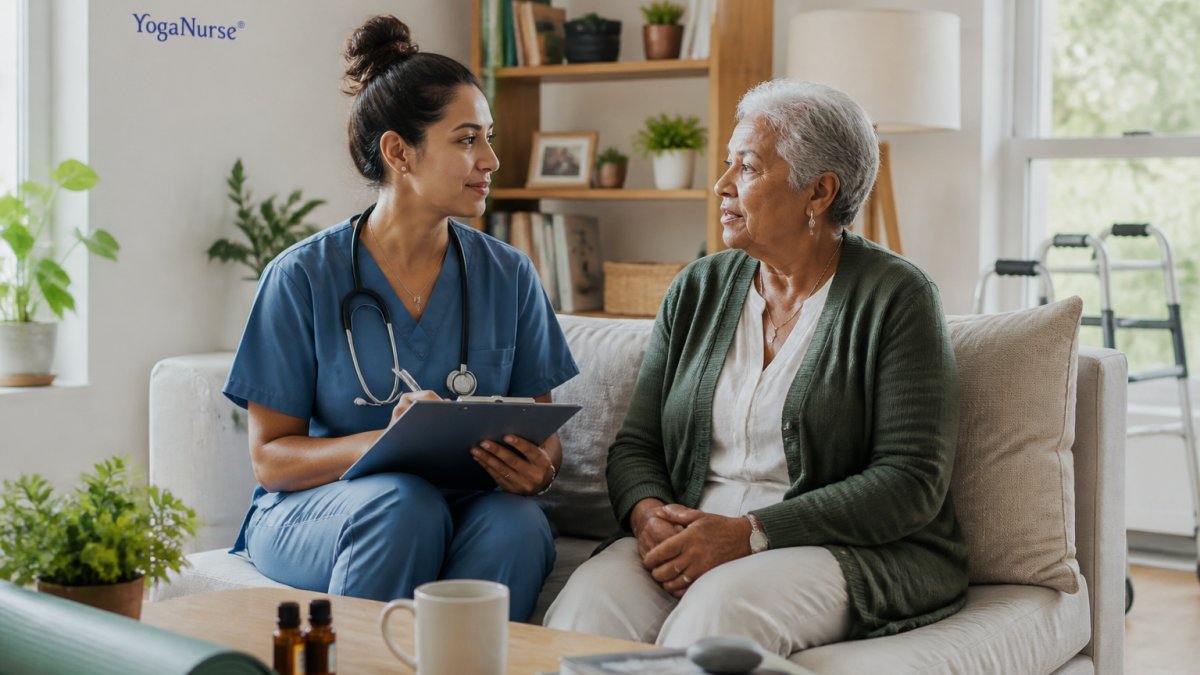
The need is urgent. Most older adults also want to stay in their own homes as they age, which means the demand for nurses who can support healthy aging at home keeps climbing.
That is the opportunity, and it is already here. Nurses hold the clinical knowledge, credibility, and teaching skill to meet it.
The Five Dimensions of Whole-Person Care
Whole-person care covers five dimensions, and each one shapes the plan:
- Physical well-being: mobility, strength, pain, nutrition, sleep
- Mental well-being: memory, attention, orientation, decision-making
- Emotional well-being: mood, grief, anxiety, fear of decline
- Social well-being: relationships, connections, isolation, support systems, community,
- Spiritual well=being: meaning, values, faith, purpose, inner peace
Skip any one of these and the plan falls apart. A patient who is strong but lonely still declines.
The Practical Weekly Workflow: Assess, Plan, Intervene, Reassess
Run every geriatric patient through the same four steps each week.
- Assess function, cognition, mood, and medications
- Plan one or two goals the patient actually cares about
- Intervene with teaching, movement, or comfort work
- Reassess what changed and adjust
Geriatric Nursing Assessment: Validated Tools and Measurable Outcomes
A geriatric nursing assessment is a structured review of an older adult’s function, cognition, mood, and medication burden, scored with validated tools so progress can be measured. That last part matters. “Patient seems better” is not an outcome.
The tools below are widely used in older adult nursing. Match the tool to the question you are asking.
|
What to Screen |
Tool |
What It Measures |
Recheck |
|---|---|---|---|
|
Function |
Katz ADL / Lawton IADL |
Self-care and daily tasks |
Weekly |
|
Gait and balance |
Timed Up and Go |
Fall risk |
Monthly |
|
Cognition |
Mini-Cog |
Memory and orientation |
On change |
|
Mood |
Geriatric Depression Scale |
Low mood |
Biweekly |
|
Medications |
Brown Bag Review |
Duplication and side effects |
Each visit |
What to Screen For: Function, Cognition, Mood, and Medications
Start with function. Can the patient dress, bathe, cook, manage money? Loss of function is often the first sign that something else is wrong.
Then cognition. A short screen catches changes early, when teaching still works.
Mood comes next. Low mood in older adults often shows up as poor appetite or withdrawal, not sadness.
Finally, medications. Bring every bottle to the visit, including supplements.
Fall Prevention Education for Seniors That Changes Behavior
Fall prevention education for seniors works when it targets one behavior at a time and ties it to something the patient wants to keep doing.
Start with the highest-yield habits:
- Clear the path from bed to bathroom
- Add night lights in hallways
- Wear supportive, well-fitting shoes indoors
Then practice. Have the patient show you how they get up from a chair. Watch their feet, their grip, their speed.
Fragility fractures often follow a first fall, so prevention is the whole game. Ask about fear of falling too.
Strength and Mobility Exercises for Older Adults: Programming Nurses Can Teach
Strength and mobility exercises for older adults should be simple, safe, and repeatable at home without equipment. The goal is not fitness. The goal is keeping the ability to stand up, walk, and carry groceries.
Teach this short set:
- Sit-to-stand: 5 to 10 reps from a sturdy chair, using arms only if needed
- Heel raises: 10 reps holding the counter
- Marching in place: 30 seconds, one hand on a wall
- Ankle circles: 10 each direction, seated
Muscle loss with age is real, but it responds to use. A few minutes most days beats one long session a week.
Healthy Aging Education for Older Adults: Turning Assessment Into Teaching
Healthy aging education for older adults turns assessment findings into plain-language teaching the patient can act on. Every score you collect should end in a sentence the patient understands and a step they can take today.
Use this pattern:
- Name the finding: “Your balance score shows a higher fall risk.”
- Explain why it matters: “That means a stumble is more likely to cause a fracture.”
- Give one action: “Let’s practice standing up slowly, three times a day.”
Teaching is where holistic nursing earns its keep.
Dementia, Delirium, and Communication Adaptations in Holistic Nursing
Communication adaptations in holistic nursing start with one rule: meet the person where they are, not where you need them to be. For a patient with dementia, that means short sentences, one question at a time, and a calm, unhurried tone. Patience becomes the primary tool for building trust, as the nuances of engaging dementia patients require a shift from clinical efficiency toward meaningful human connection.
Dementia Communication: Concrete Techniques That Work
Try these in practice, and teach them to family caregivers so the approach is consistent across the day:
- Approach from the front, at eye level, and say the person’s name before touching them
- Use a warm greeting and one topic at a time
- Offer two choices instead of open questions (“Tea or water?” not “What do you want?”)
A useful framework is the “3 R’s” of dementia communication: Reassure, Redirect, Reassure again. It is simple enough for untrained family members to remember under stress.
Delirium: The Acute Change Nurses Must Catch
Delirium looks different from dementia. It comes on fast, over hours or days, and attention wanders. It is a medical emergency, not a behavior problem. Use a validated screen such as the 4AT or the Confusion Assessment Method (CAM) when you suspect it. Look for the common triggers:
- Infection, especially urinary tract or respiratory
- Pain, constipation, or urinary retention
- Dehydration or electrolyte imbalance
Non-Pharmacologic First
Therapeutic touch, gentle massage, slow breathing, and orientation cues can calm an agitated patient before any drug is considered. Non-pharmacologic interventions come first whenever it is safe. Reorient with the date, the place, and the reason for the visit, calmly, once, not repeatedly. Keep a consistent caregiver when possible, and protect sleep at night with dim lights and minimal interruptions.
This Is Where Nursing Teaching Pays Off
Families are the ones managing dementia and delirium at home between visits, and most have never been taught a single technique. That is a teaching gap nurses can fill directly, and it is exactly the kind of practical, trusted education the YogaNurse Ready to Teach Healthy Aging Collection for Nurses is built for. The collection gives nurses a ready-made structure for teaching older adults and their caregivers the communication, orientation, and safety habits that keep people safer at home.
Culturally Responsive Care, Caregiver Partnership, and Care Transitions
Most geriatric nursing guides mention culture and caregivers in a sentence. This section treats both as clinical skills with tools, because they change outcomes as much as any medication review.
Culturally Responsive Care: Ask, Don’t Assume
Culturally responsive care means the plan fits the patient’s language, faith, food, and family structure, not the nurse’s defaults. Ask directly, and write the answers in the chart so the next nurse does not have to guess:
- Who makes decisions in this family, and who needs to be included?
- What language is easiest for the patient to understand and speak when tired or in pain?
- Who does the cooking, and what foods are non-negotiable?
That last question is the trauma-informed piece most guides skip. A patient who has had a bad experience with a hospital may refuse a referral not out of stubbornness but out of fear. Name it, ask about it, and build the plan around it. A simple opener works: “Has anything happened in the past with doctors or hospitals that I should know about?”
Caregiver Partnership: Screen for Strain, Not Just Presence
Partner with caregivers, but do not treat them as free labor. They carry the daily load, and they burn out quietly. Screen them with a validated tool such as the Zarit Burden Interview or the shorter Modified Caregiver Strain Index. Then act on the score:
- Name the strain out loud so the caregiver feels seen
- Identify one task that can be delegated or dropped
- Connect them to respite options, support groups, or a social worker
Shared decision-making works best when the patient, the caregiver, and the nurse agree on one goal at a time. Write that goal down and revisit it at the next visit.
Care Transitions: The Handoff That Prevents Readmissions
Care transitions are where plans break. Before discharge, confirm in writing:
- Who will fill and manage medications, and how they will pay for them
- What the follow-up appointment is and how they will get there
- Which warning signs mean “call us now”
A clear handoff prevents readmissions and keeps the patient aging in place.
Turning This Into Teaching Work
Every one of these conversations is teachable, and nurses are the professionals families already trust to have them. The YogaNurse® Ready-to-Teach Healthy Aging Collection packages this kind of practical, culturally aware, caregiver-inclusive education into two programs nurses can lead right away: Age Well at Home™ and Muscle & Mobility™. Age Well at Home™ helps older adults stay safer and more independent at home, and Muscle & Mobility™ addresses age-related muscle loss, strength, and movement.
Conclusion: Where Nursing Teaching Meets the Opportunity
America is getting older, and millions of people want to stay strong, mobile, and independent at home. Nurses are the ones who can teach them how, and that skill is in demand.
YogaNurse® was built for exactly this moment. Our Ready-to-Teach Healthy Aging Collection gives you two professionally developed programs: Age Well at Home™, which helps older adults stay safer and more independent, and Muscle & Mobility™, which addresses age-related muscle loss, strength, and movement.
Holistic nursing practice for geriatric patients is not a niche. It is the future of care for a whole generation, and nurses are positioned to lead it.
Frequently Asked Questions
What is holistic nursing care for older adults?
Holistic nursing care treats an older adult as a whole person, not a list of diagnoses. It addresses physical, mental, emotional, social, and spiritual well-being together, using assessment, care planning, and relationship-based communication. The goal is function, comfort, and quality of life. Because older adults often live with several chronic conditions and geriatric syndromes at once, whole-person care helps nurses prioritize what matters most to the patient each week.
What should a holistic geriatric nursing assessment include?
A geriatric nursing assessment should cover function, cognition, mood, medications, and home safety, not just vital signs. Use validated tools to make results measurable: gait and balance testing for fall risk, a cognitive screen, a depression screen, and a medication review for side effects such as dizziness or sedation. Document baseline scores so you can track change over time and show whether your teaching and interventions are working.
How can nurses teach older adults to prevent falls at home?
Start with a home hazard check: loose rugs, poor lighting, clutter on stairs, and missing grab bars in the bathroom. Then build strength and balance work into the daily routine, because fall prevention education for seniors works best when it pairs environment changes with physical training. Review medications that cause dizziness, and teach patients to rise slowly. Recheck gait and balance every few months to confirm the plan is reducing risk.
How can nurses lead healthy-aging education workshops?
Nurses already have the clinical knowledge and credibility to teach healthy aging education for older adults. A ready-to-teach program saves months of curriculum development: YogaNurse® offers the Ready-to-Teach Healthy Aging Collection, with Age Well at Home™ and Muscle & Mobility™, both built for older adults. You can deliver paid workshops, repeat engagements, and new professional opportunities without building the programs from scratch. See the collection at https://yoganurse.mykajabi.com/ready-to-teach.
The challenge is simple: older adults need trusted teaching, and most nurses have the skill but not the ready-made programs.
YogaNurse® closes that gap with evidence-informed training built by a nurse for the realities of the profession, including the Ready-to-Teach Healthy Aging Collection™.
Get started with YogaNurse® and turn your geriatric expertise into programs older adults need and will pay for.

FREE GUIDE!
Get powerful curated tips on the art of nurses teaching yoga
In spirit of our upcoming training: YNYTT (Yoganurse Yoga Teacher Training), we are giving away this jam-packed guide full of wonderful curated tips that will help you become a highly effective & highly influential nurse yoga teacher.
