
Holistic Wellness Training for Nurse Practitioners
Table of Contents
- What Holistic Wellness Training Means for Nurse Practitioners
- Holistic Nursing Certification: Credentials That Matter
- Evidence-Informed Holistic Nursing Practice in Clinical Settings
- Holistic Nursing Continuing Education: Expanding Your Knowledge
- Health Coaching Training for Nurse Practitioners
- Integrating Whole-Person Care Into Your Practice
- Building a Sustainable Wellness Practice
- Frequently Asked Questions
Last Updated: October 16, 2026
What Holistic Wellness Training Means for Nurse Practitioners
Holistic wellness training for nurse practitioners equips NPs to integrate whole-person care, physical, mental, emotional, and spiritual, into clinical practice. Rather than treating isolated symptoms, it considers how lifestyle, beliefs, stress, and environment influence healing.
For NPs managing complex patient populations, this training offers what conventional education often misses: practical tools to address root causes, not just symptoms. It builds on your clinical foundation while adding evidence-informed approaches like therapeutic yoga, mindfulness, functional nutrition, and mind-body interventions.
For you, it means deeper relationships, less burnout, and expanded clinical impact.
This isn’t about abandoning evidence-based medicine, it’s about expanding what evidence-based means.
Holistic Nursing Certification: Credentials That Matter
A holistic nursing certification validates your expertise in whole-person care, recognizing patient-centered, evidence-informed approaches that honor the body-mind-spirit connection.
Here’s where most guides blur the picture: many credentials were built for RNs, not NPs. If you hold an RN license and an advanced practice degree, know which pathways accept NP-level credentials, and which will leave you reviewing assessment skills you mastered years ago.
NP-Level vs. RN-Only Pathways
The American Holistic Nurses Certification Board (AHNCC) offers the most widely recognized credentials. Its foundational certification is open to RNs, while advanced holistic nurse credentials are designed for graduate-prepared nurses, where NPs typically fit. Eligibility generally requires an active RN license, documented clinical experience, holistic nursing continuing education contact hours, and an exam. Confirm current eligibility with the certifying board before enrolling in any prep program.
Beyond AHNCC, several adjacent credentials appear in search results and can confuse the decision:
- Holistic nursing certification, whole-person nursing practice, caring theory, and complementary modalities; the closest fit to an NP’s existing scope.
- Integrative or functional medicine training, often certificate-based rather than board-certified, focused on root-cause assessment, nutrition, and lifestyle medicine.
- Health coaching credentials, a distinct competency (covered later in this article) that complements but does not replace holistic nursing certification.
What the Credential Actually Changes
Certification gives you the language to discuss root causes, an understanding of how chronic stress disrupts physiology, and confidence to recommend evidence-informed interventions, meditation for anxiety, therapeutic yoga for chronic pain, nutrition for inflammation, with the same rigor you bring to pharmaceutical management.
What matters most is the education behind the certificate. Quality programs cover functional medicine, trauma-informed care, botanical medicine, and therapeutic practices grounded in research and clinical wisdom, integrating theory with application you can use during patient encounters.
A Quick Comparison Framework
Rather than chase every credential, compare options on five dimensions that actually affect your career:
- Eligibility, Does it require an RN license only, or graduate preparation?
- Curriculum, Is it theory-heavy, or does it include supervised practice and case application?
- Time commitment, Contact hours, clinical hours, and exam preparation.
- Accreditation, Is the credential recognized by employers and aligned with your state board’s continuing education rules?
- Outcome, Does it lead to a board credential, a certificate of completion, or both?
A credential that doesn’t fit your state’s continuing education requirements or your employer’s recognition won’t move your practice forward. Match the credential to the goal.
Evidence-Informed Holistic Nursing Practice in Clinical Settings
Evidence-informed holistic nursing practice means using interventions backed by clinical data, not wishful thinking. Mind-body practices, functional nutrition, and therapeutic yoga have measurable physiological effects documented in peer-reviewed literature.
Meditation and mindfulness lower cortisol, blood pressure, and inflammatory markers. Therapeutic yoga improves mobility, reduces pain, and enhances proprioception. These are complementary approaches with growing evidence bases that work alongside, not instead of, conventional treatment.
The real skill is knowing when and how to integrate these approaches.
Quality holistic nursing education teaches you to assess which patients benefit from which approaches, screen for contraindications, and measure outcomes, distinguishing what’s research-supported, promising, or anecdotal. That discernment keeps you credible with colleagues and safe with patients.
Holistic Nursing Continuing Education: Expanding Your Knowledge
Holistic nursing continuing education deepens expertise in approaches not covered in standard NP programs: functional medicine assessment, botanical medicine interactions, trauma-informed care, and the physiology of stress and healing.
Effective programs require hands-on practice, not passive listening: assessment techniques, facilitating meditation or breathing exercises, case studies, and competency in teaching self-care. The best are designed for nurses in real clinical settings, with limited time and specific needs. Programs like The YogaNursing Essentials and The 6 Minute Nurse Reset exemplify this approach, offering focused, practical training that fits into a busy NP schedule while building competency in therapeutic practices you can use immediately with patients.
Connecting Training to Scope, Prescribing, and Referral Boundaries
This is the piece most articles skip, and it matters more for NPs than for any other nursing role. What you can do with holistic training depends on where you practice.
- Scope of practice, States vary widely. Some grant NPs full practice authority; others require collaborative agreements or physician supervision. Your holistic training doesn’t change your scope, it operates within it.
- Prescribing authority, If you recommend botanical medicines or supplements, know whether your state allows you to prescribe, recommend, or merely discuss them. Some states restrict NP prescribing of certain natural products.
- Referral boundaries, Know when to refer. A patient with unexplained weight loss, new neurological symptoms, or a suspected cardiac event needs conventional workup, not a yoga prescription. Training should sharpen, not blur, that line.
Evaluating Programs Without Wasting Your Time
Look for programs that integrate theory with practice. Those rooted in nursing theory, particularly the emphasis on the caring relationship as therapeutic, offer a philosophical foundation that helps you articulate your approach to colleagues and skeptical patients. The strongest pair theory with supervised practice and outcome measurement.
The most valuable continuing education often comes from programs created by nurses, for nurses, understanding your scope, constraints, and the challenges of busy clinical practice. They address real questions:
- How do I document holistic interventions in the medical record?
- How do I discuss these approaches with physicians who may be unfamiliar with them?
- How do I measure outcomes so I can tell whether an intervention is helping?
- How do I fit a whole-person assessment into a 15-minute visit?
Fitting Learning Into a Full Clinical Schedule
Nurses are pressed for time, and continuing education shouldn’t add to the exhaustion. A few practical approaches:
- Stack learning with practice. Choose programs that let you apply a technique with a real patient the same week you learn it.
- Use short, focused modules. Micro-learning sessions of 20-30 minutes fit between shifts better than multi-hour webinars.
- Track contact hours as you go. Keep a simple log of completed modules, dates, and topics so recertification and license renewal don’t become a scramble.
- Choose one modality at a time. Master therapeutic communication or mindfulness instruction before adding botanical medicine. Depth beats breadth when you’re building clinical confidence.
Done well, continuing education is the bridge between your NP program and the whole-person care your patients are asking for.
Health Coaching Training for Nurse Practitioners
Health coaching training for nurse practitioners develops a distinct competency: a collaborative process where you help patients identify their own health goals and remove barriers to achieving them.
For NPs, health coaching training teaches you to shift from expert-telling-patient to facilitator-supporting-patient. This distinction matters. Instead of prescribing a diet, you ask questions that help the patient recognize their relationship with food and identify changes they’re ready to make.
For you, it means fewer patients returning with the same problem because they’ve actually changed behavior.
Training typically covers motivational interviewing, behavior change psychology, goal-setting, and accountability, helping you recognize ambivalence, work with resistance, and support sustainable change.
Integrating Whole-Person Care Into Your Practice
The real work begins when you translate training into clinical reality. Integrating whole-person care into your practice requires intentional changes to how you assess patients, plan treatment, and measure success.
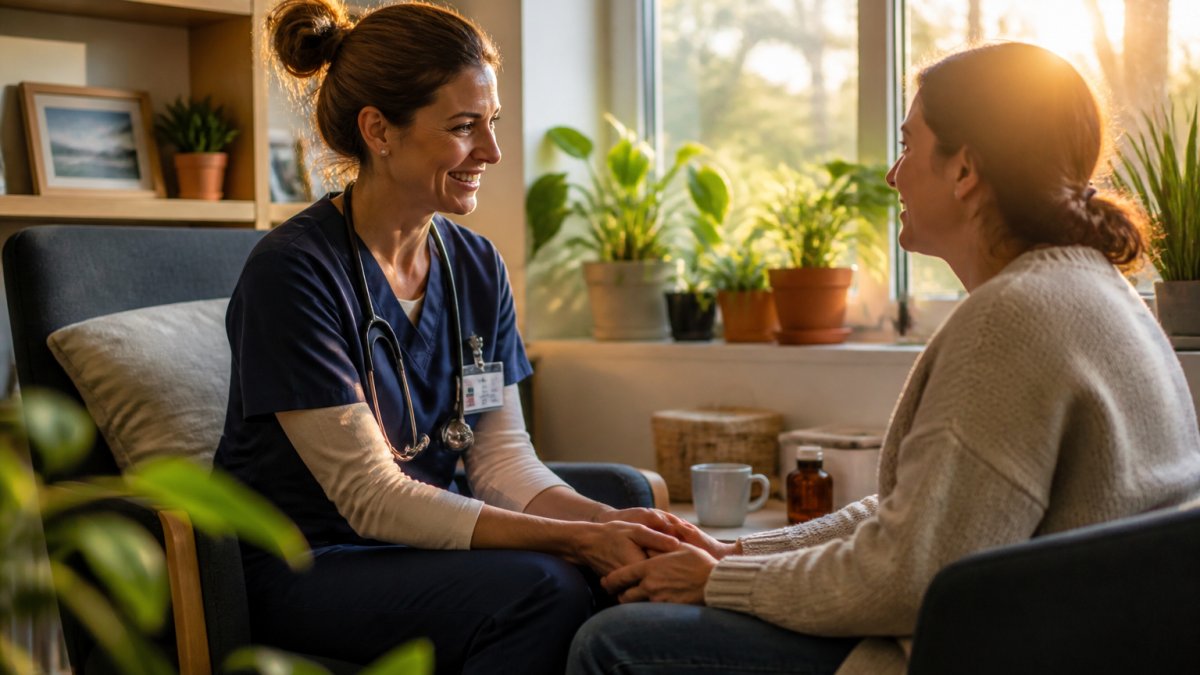
Start with assessment. Beyond the standard history and physical, ask about sleep, stress sources, movement, nutrition, and what brings the patient meaning.
Documentation matters. Learn how to record holistic interventions in your medical record so they’re visible to other providers and defensible if questioned.
Measurement keeps you accountable. Track outcomes: Does the patient’s pain decrease with yoga practice? Does blood pressure improve with stress reduction? Does sleep quality improve with mindfulness?
Building a Sustainable Wellness Practice
Many NPs who complete holistic wellness training consider expanding into private practice or wellness offerings alongside clinical work.
Start by understanding your market. Who needs your services? Are you targeting patients with chronic pain, stress-related illness, or aging-related concerns?
Develop clear service offerings.
Build credibility actively: document outcomes, share case studies (with privacy protection), write about your approach, and speak at conferences or community events.
YogaNurse® resources support this transition, whether integrating holistic approaches into existing practice or building a specialty wellness practice. Programs like YogaNurse Ready to Teach Healthy Aging Collection for Nurses and YogaNurse Yoga Teacher Training provide training in therapeutic medical yoga, health coaching frameworks, and the business side of wellness offerings, designed specifically for nurses.
Consider hybrid models: part-time clinical work with private wellness coaching, corporate programs alongside patient care, or group classes on stress relief and pain management.
Building expertise in holistic wellness training for nurse practitioners expands your clinical authority and deepens your impact on patient health.
Frequently Asked Questions
What is holistic wellness training for nurse practitioners?
Holistic wellness training equips nurse practitioners with evidence-informed skills to address the whole patient—mind, body, and spirit—rather than isolated symptoms. It combines clinical expertise with therapeutic practices like mindfulness, functional nutrition, and mind-body interventions. This approach deepens patient-centered care, improves outcomes, and expands your clinical authority by offering complementary strategies alongside conventional treatment.
How does holistic nursing certification differ from continuing education?
Holistic nursing certification typically requires meeting eligibility criteria, completing structured coursework, and passing an examination to earn a formal credential recognized across practice settings. Continuing education fulfills professional development requirements and contact hours needed to maintain licensure and expand specific skills. Both are valuable; certification signals specialized competency, while continuing education keeps your practice current and supports career advancement.
Can nurse practitioners actually combine health coaching with clinical practice?
Yes. Health coaching training for nurse practitioners teaches you to guide patients toward sustainable behavior change—managing stress, improving nutrition, increasing movement—within your scope of practice. When integrated thoughtfully, coaching amplifies clinical outcomes by addressing root causes of illness. Many NPs use coaching to extend patient contact time, improve adherence to treatment plans, and create additional income streams through group wellness education or private practice.
How do I know if a holistic wellness training program is truly evidence-informed?
Look for programs that cite peer-reviewed research, explain the mechanism behind practices (why meditation reduces inflammation, for example), and acknowledge limitations. Ask whether the program is taught by nurses with clinical credentials and whether outcomes have been measured. Evidence-informed does not mean perfect—it means the practice has been studied, results are published, and the program is transparent about what the research shows and what remains exploratory.
I work 12-hour shifts and am already burned out. How much time does this training actually require?
Training formats vary. Many programs offer online, self-paced modules designed for working nurses, allowing you to learn in short sessions. Some include micro-credentials you can earn incrementally. The key is choosing a program built for nursing reality—not generic wellness training. Before enrolling, ask about module length, whether you can pause and resume, and whether the content directly applies to your shift schedule and patient population.
What makes holistic wellness training different from generic yoga or meditation apps?
Nurse-created holistic wellness training is designed for nursing physiology, psychology, and scope of practice. It addresses the specific stressors of clinical work, teaches you to assess and guide patients safely, and integrates with your existing clinical skills. Generic apps lack clinical context and do not prepare you to teach or prescribe these practices to patients. Nurse-led training also builds professional authority and creates pathways to income and specialty practice.
Can I actually build a sustainable income from holistic wellness offerings?
Yes, when you combine clinical credibility with structured training and clear positioning. Many nurse practitioners launch group wellness programs within their organization, offer private health coaching, or teach specialty classes (stress relief for shift workers, pain management for chronic illness). Success requires viewing it as a business—defining your niche, understanding your market, and marketing to the right audience. Proper training includes both clinical skills and the entrepreneurial foundation to sustain it.

FREE GUIDE!
Get powerful curated tips on the art of nurses teaching yoga
In spirit of our upcoming training: YNYTT (Yoganurse Yoga Teacher Training), we are giving away this jam-packed guide full of wonderful curated tips that will help you become a highly effective & highly influential nurse yoga teacher.
