
Incorporating Human Caring Theory in Practice: A Nurse’s Guide
Table of Contents
- Why Human Caring Theory Belongs at the Bedside
- Human Caring in Nursing Examples You Can Use Tonight
- The Caritas Processes in Nursing: A Shift-Ready Checklist
- Frequently Asked Questions
Last Updated: October 19, 2026
Why Human Caring Theory Belongs at the Bedside
Human caring theory is not an abstract academic exercise. It is a practical map for the moments that matter most in nursing. At YogaNurse®, we see it as the thread that holds clinical skill and human connection together.
I came to this work through a meeting that changed my direction. While earning my nursing degree at 51, my professors chose me as the student participant in a weekend program featuring Dr. Jean Watson. Watching her present, I saw the parallels between the ancient wisdom of yoga and the science of modern nursing. She remains one of my greatest mentors and influences. Integrating this philosophy into clinical practice requires a shift in how we structure to ensure that the patient’s human experience remains at the center of every intervention.
Caring is not extra work. It is the work.
Human Caring in Nursing Examples You Can Use Tonight
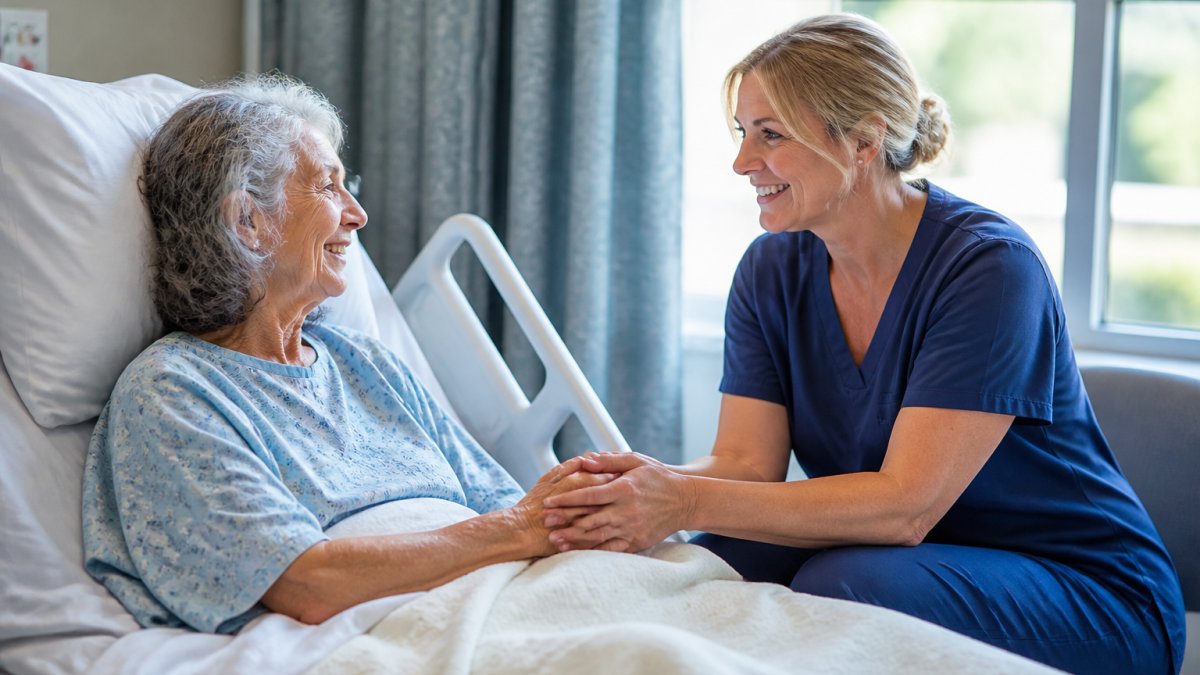
. Learn about Jean Watson. https://www.watsoncaringscience.org/about-wcsi/jean-bio/
Simple actions carry the theory into real shifts. These human caring in nursing examples take seconds, not hours:
- Sit before you speak. Lower yourself to eye level for one exchange.
- Ask one open question. “What matters most to you today?”
- Name the feeling. “That sounds frightening.”
- Pause before leaving. One breath, one check-in.
A common mistake is treating caring as a separate task. In practice, it lives inside the tasks you already do.
The Caritas Processes in Nursing: A Shift-Ready Checklist
https://www.watsoncaringscience.org/about-wcsi/jean-bio/caring-science-theory/10-caritas-processes/
The Caritas Processes in nursing translate Watson’s caring science into observable behaviors. Use this checklist during any shift:
- Arrive present: one breath before entering the room
- Greet the person, not the chart
- Ask what matters most today
- Listen without interrupting for 30 seconds
- Honor dignity in every touch and word
- Check your own state; care for yourself too
Watson’s caring science in nursing practice asks for authentic presence. That starts with a regulated, grounded nurse.
Thank you Jean, for inspiring me and thousands of nurses and health care professionals globally. You are a treasure
https://www.watsoncaringscience.org/
Frequently Asked Questions
What is human caring theory in nursing?
Human caring theory, developed by Dr. Jean Watson, centers nursing on the transpersonal caring relationship between nurse and patient. It views each person as a whole mind-body-spirit being deserving of dignity and respect. The theory outlines ten Caritas Processes that guide caring behaviors, from practicing loving-kindness to creating a healing environment. It is used in clinical practice, education, and research to keep human connection at the heart of care.
How can nurses practice human caring when time is limited?
Start with small, intentional actions. Pause at the door, take a breath, and enter with authentic presence. Use eye contact and a warm greeting. Ask one open-ended question about what matters most to the patient today. These micro-practices take seconds but signal caring. You can also use brief centering techniques between tasks to sustain your own energy. The YogaNurse 6 Minute Nurse Reset offers a quick way to recharge.
What are examples of Caritas Processes in nursing?
Examples include practicing loving-kindness by greeting each patient with a genuine smile, cultivating spiritual beliefs by asking about sources of hope, and creating a healing environment by reducing noise and clutter. Another is being authentically present during a difficult conversation. These processes are observable actions, not abstract ideals, and can be documented in care plans to show how you honor patient dignity and whole-person care.
Twelve-hour shifts make caring feel like one more demand. It does not have to be. YogaNurse® helps nurses recover, refocus, and return to the bedside with presence, through the Sacred Remedy™ approach, Watson-informed education, and training built by a nurse for nursing reality. Explore what’s possible and bring caring back to your practice.

FREE GUIDE!
Get powerful curated tips on the art of nurses teaching yoga
In spirit of our upcoming training: YNYTT (Yoganurse Yoga Teacher Training), we are giving away this jam-packed guide full of wonderful curated tips that will help you become a highly effective & highly influential nurse yoga teacher.
